What To Do If Wildlife Destroys Your Garage Door
If a bear or other wildlife destroys your garage door, here’s how we help homeowners stay safe, secure the opening, and decide between repair and replacement.
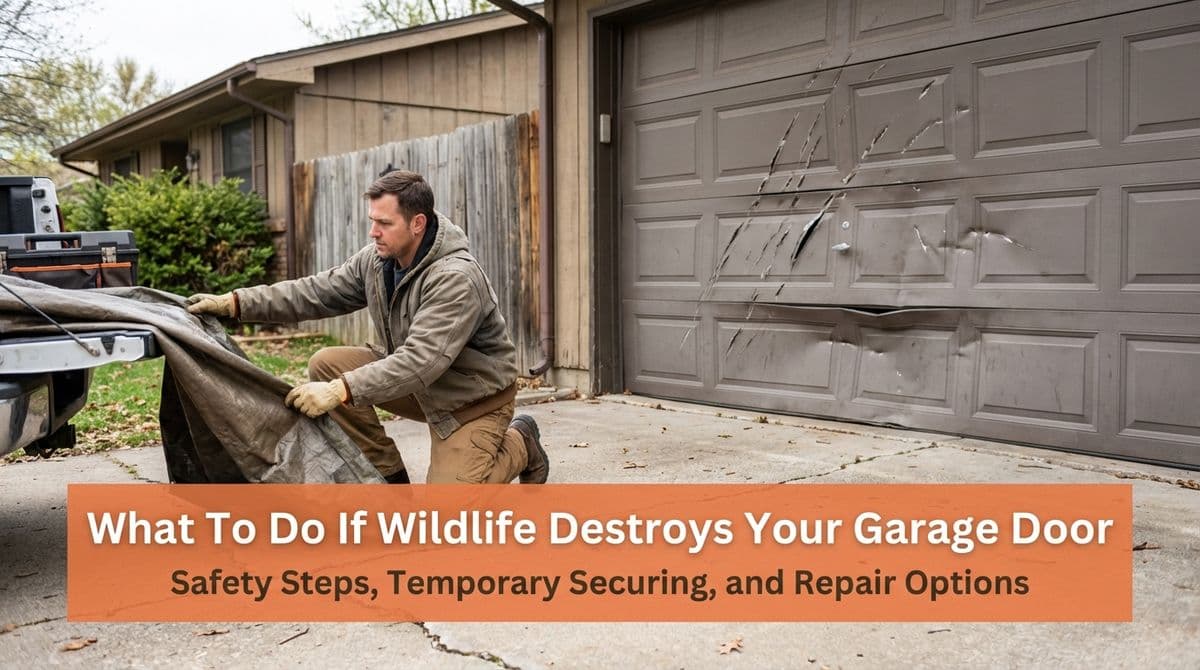
When Wildlife Wrecks Your Garage Door
We recently got a call from a homeowner — let’s call him Mike — who woke up to find a bear had torn through his garage door in the middle of the night. The lower panels were crumpled, rollers were off the track, and the door was stuck halfway open. On top of the shock, Mike and his wife were scared to even touch the door, worried it might fall on someone.
We’ve seen this a few times over the years, and we walked them through how to stay safe, secure the garage as best they could, and what we’d do once we arrived on site. If wildlife ever destroys your garage door, here’s exactly how we recommend handling it, based on how our team responds to these calls.
Step One: Safety First — Don’t Rush the Door
When we get a call like Mike’s, our first priority is keeping everyone away from danger. A damaged garage door is heavy, unpredictable, and under spring tension. Add missing rollers or bent tracks, and it can move in ways you don’t expect.
Before you try anything, we always tell homeowners on the phone to:
- Keep kids and pets away from the door area.
- Do not stand directly under the door at any time.
- Avoid forcing the door if it feels jammed, twisted, or crooked.
- Look for obvious hazards like loose pieces of metal, hanging panels, or broken glass.
If the door looks like it’s about to collapse, or panels are hanging by one side, we usually recommend you do not touch it at all and call us (or your local garage door pro) for emergency help.
Evaluating the Damage: Panels vs. Complete Replacement
Once we know everyone is safe, we start asking the same questions we asked Mike over the phone so we can decide how urgent the situation is and what kind of repair you might be looking at.
We typically ask:
- Which part got hit? Just the bottom panel, or more than one?
- Are the panels bent or punched through?
- Are rollers still in the tracks? Especially the upper rollers.
- Are the tracks themselves bent or pulled away from the wall?
On site, our team will inspect the panels, hardware, and track to determine whether we can replace a few sections or if you truly need a whole new door. With wildlife damage, the bottom panel usually takes the worst hit, but the force can twist the whole system.
How We Safely Lower a Damaged Door
Mike’s garage door was stuck open, and like many homeowners, he was nervous about bringing it down. When we can’t get there right away, we sometimes talk customers through carefully lowering the door so they can secure the garage overnight. Here’s the general process we share, with important safety caveats.
If You Have an Automatic Opener
On calls where there is an opener, we usually guide people to:
- Fully close the door with the opener if it still tracks fairly straight and doesn’t bind or twist.
- If the door jerks, tilts badly, or stops, stop immediately and leave it as is.
- Pull the red emergency release cord only if the door is stable and you understand how to support its weight.
When our technicians are on site, we support the door manually and control its movement as we release the opener. We don’t recommend homeowners do this if the door is badly racked, rollers are missing, or panels are separated.
If Your Door Is Manual (No Opener)
In Mike’s case, there was no automatic opener — just a rope pull. That’s similar to what we sometimes hear on wildlife calls. Here’s what we usually suggest if the damage is moderate and at least some rollers on one side are still in the track:
- Have two adults on the outside of the door, one on each side.
- Stand to the side, not directly under the door.
- Slowly lower the door together, watching for twisting or binding.
- If it starts to rack badly or feel out of control, stop and wedge a block or sturdy object under the bottom edge to support it.
We reassured Mike’s family of something we see often: if you still have upper rollers engaged on at least one side, the door typically won’t just drop out of the tracks. But whenever there are missing upper rollers on both sides or panels separating, we prefer you leave it alone and let our crew secure it with proper tools.
Temporary Ways We Secure a Wildlife-Damaged Garage
When we arrive after wildlife damage, our first job is to make the garage secure, even if we can’t fully repair the door that day. Depending on what we find, we may:
- Lower the door fully and brace it from the inside with 2x4s or locking bars.
- Remove a broken section and cover the opening with plywood or OSB.
- Straighten tracks and reinstall rollers just enough for short-term operation, if it’s safe.
- Disable the opener so no one accidentally runs a damaged door.
We always explain to homeowners what’s safe to use and what’s strictly temporary. Often, like we told Mike, you may need to park your cars outside for a bit while we wait on replacement panels or a new door.
Repair vs. Replacement After Bear Damage
Once things are secure, we walk through your long-term options. With wildlife damage, our team typically considers:
- Panel replacement if only one or two sections are bent and the tracks and hardware are in good shape.
- Full door replacement if multiple panels are crushed, the door is twisted, or the cost of parts and labor approaches a new door.
- Upgrading hardware (heavier hinges, stronger track, better bottom seals) when installing a new door, especially in bear country.
We also often help customers gather the information insurance companies want: photos of the damage, a written estimate, and our professional opinion on whether repair is realistic.
How to Be Better Prepared in Bear Country
After calls like Mike’s, we usually talk about prevention for the future. While no garage door is totally “bear-proof,” there are ways we help customers reduce the odds of a repeat visit:
- Keep garbage, pet food, and bird seed out of the garage whenever possible.
- Use reinforced bottom sections or heavier-gauge steel if bears are common in your area.
- Consider better exterior lighting and motion-activated devices.
- Make sure your weatherstripping and seals are in good condition so smells don’t vent straight out.
When we’re on site for a replacement, we’re always happy to walk around with you, look at food storage and access points, and share what we’ve seen work for other local homeowners.
When to Call a Professional Right Away
If wildlife has destroyed your garage door and you’re staring at a mangled opening, you don’t have to figure it out alone. Anytime you see:
- Panels hanging or twisted
- Multiple missing rollers
- Tracks bent or pulled off the wall
- Springs or cables visibly damaged
we recommend calling a garage door professional before you try to move the door. Our team’s routine is simple: talk you through immediate safety, help you secure the opening as best you can, then come out to stabilize, evaluate, and get you a clear repair or replacement plan.
Wildlife encounters can be stressful, but with the right steps and a little guidance, your garage can be made safe and secure again.